

Our Iphofen Vineyard Sites
More than 200 million years ago, the foundation for what is now known as Franconian wine country was laid with the formation of the Franconian Triassic. This unique terroir of red sandstone, shell limestone, and Keuper clay makes it possible for us and our fellow winemakers to cultivate world-class wines between the Steigerwald and Spessart regions. You may be wondering whether the vineyard site really makes such a difference in wine. It absolutely does. The roots of our vines reach up to 20 meters deep into the soil, where they can optimally absorb water, minerals, and nutrients. Each type of soil provides a different composition, resulting in distinctive wines from every site.
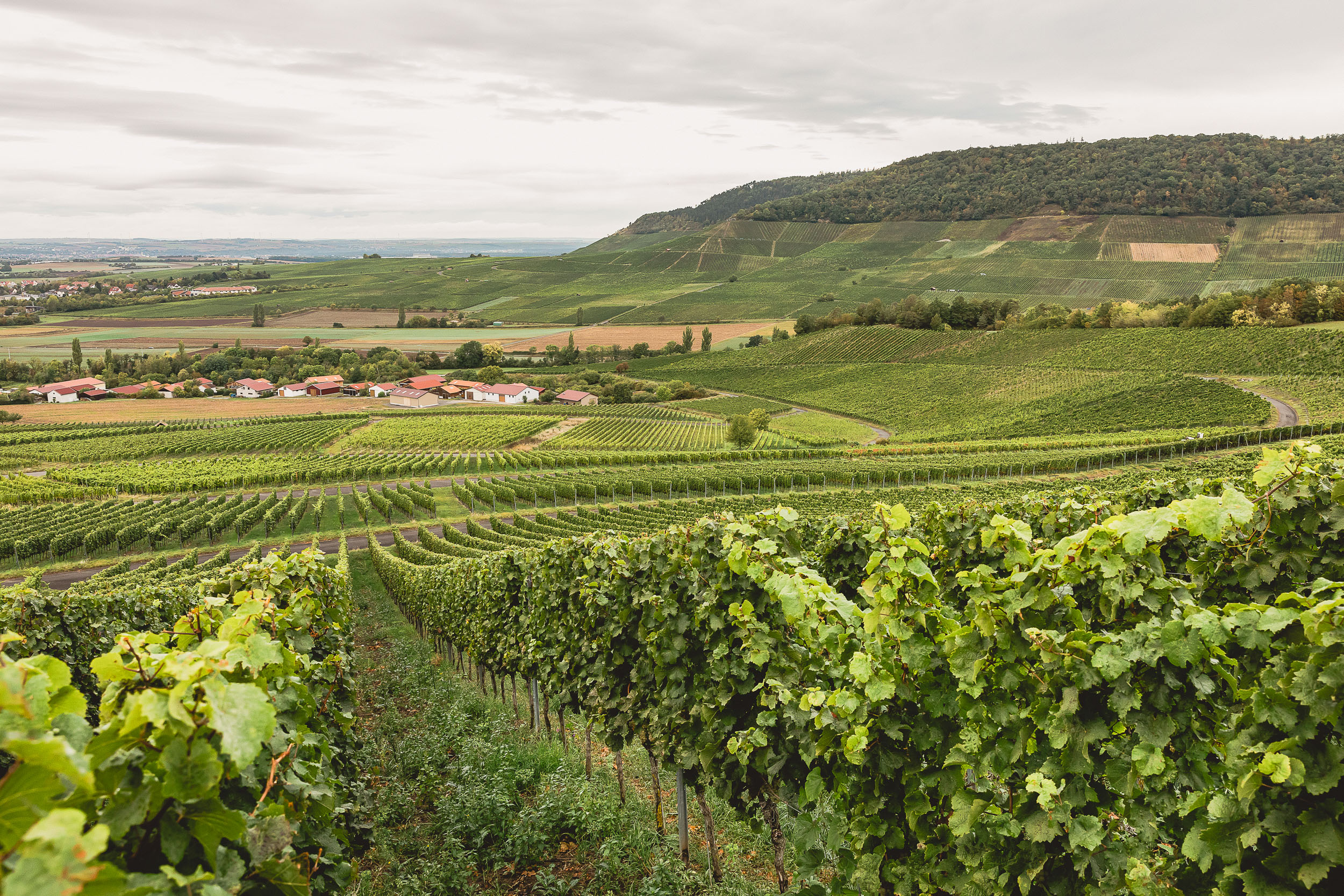
In Iphofen and its surroundings, on the edge of the Steigerwald, we grow our wines on gypsum Keuper soils. Below, we are pleased to introduce our most important vineyard sites and their influence on our wines.
Iphöfer Julius-Echter-Berg
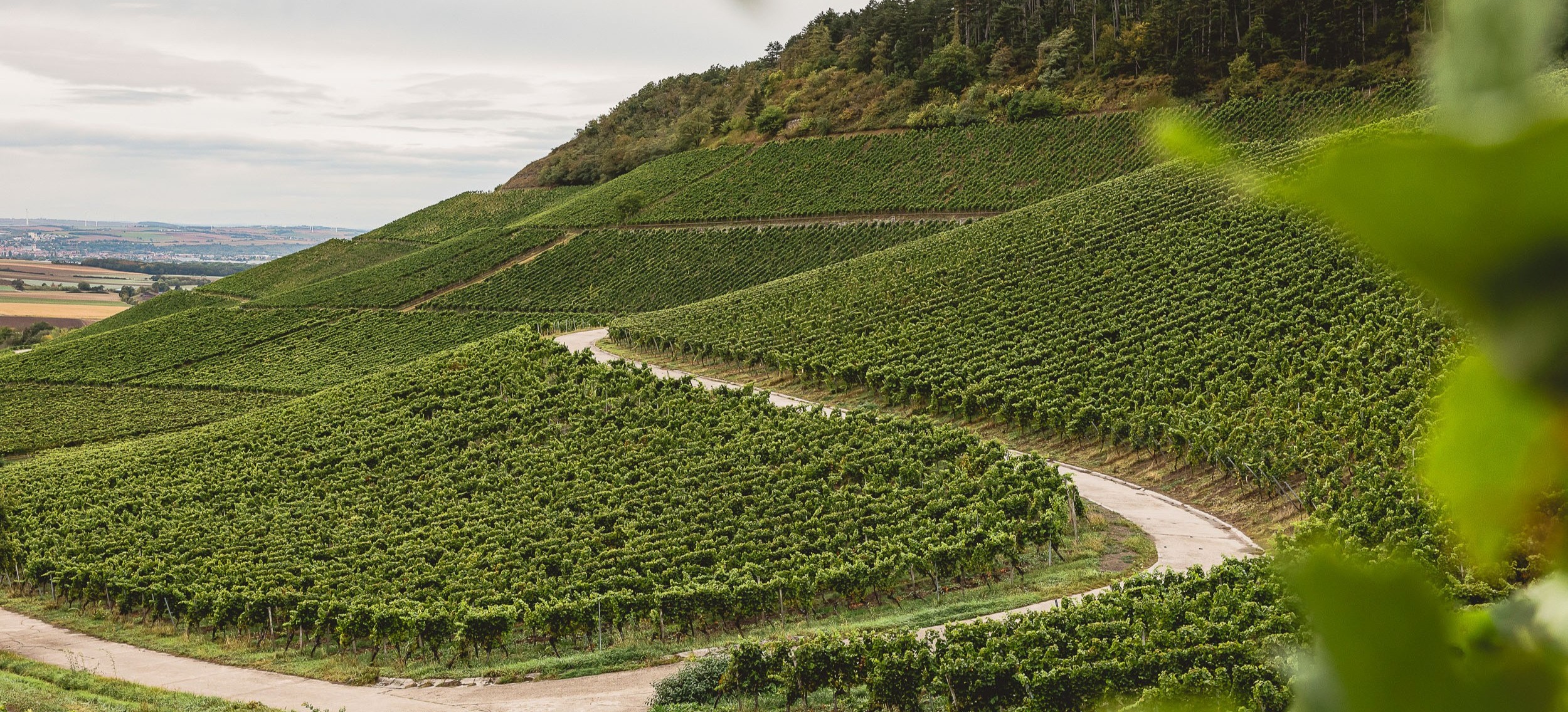
The Julius-Echter-Berg is the legendary flagship vineyard site of Iphofen. It is considered one of the finest and most renowned sites in Franconia—so well known that even Queen Elizabeth II was served a 1950 Riesling Auslese from these vineyards at her coronation banquet in 1953. The vineyard is named after the Prince-Bishop of Würzburg, Julius Echter von Mespelbrunn (1545–1617).
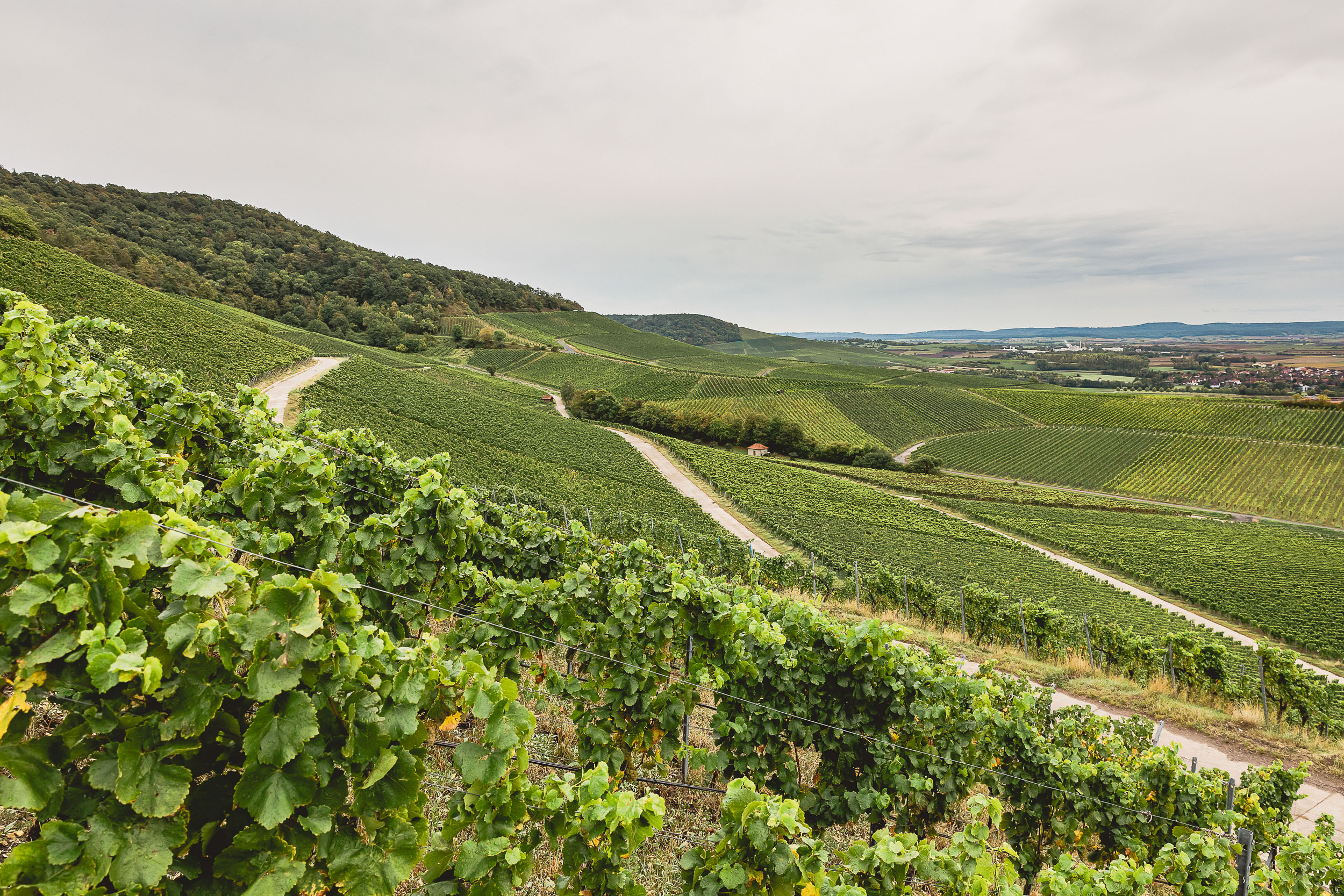
Often simply abbreviated as “JEB,” this site is a pure south-facing slope with a gradient of 30–60%. It lies in a natural basin on the Schwanberg, in the steepest section directly below the forest. In this hot location, surface temperatures of up to 70°C have been recorded. The characteristic grey-brown Keuper soil stores heat exceptionally well and releases it gradually back to the vines—ideal conditions for producing wines with strong character. At this point, the gypsum Keuper is interspersed with reed sandstone. The Steigerwald forest above the vineyards, at the top of the Schwanberg, protects the vines like a woolen cap from cold winds.
Wines from the JEB are typically very spicy, mineral-driven, dense, and distinctive. They are also known for their remarkable aging potential.
Iphöfer Kronsberg
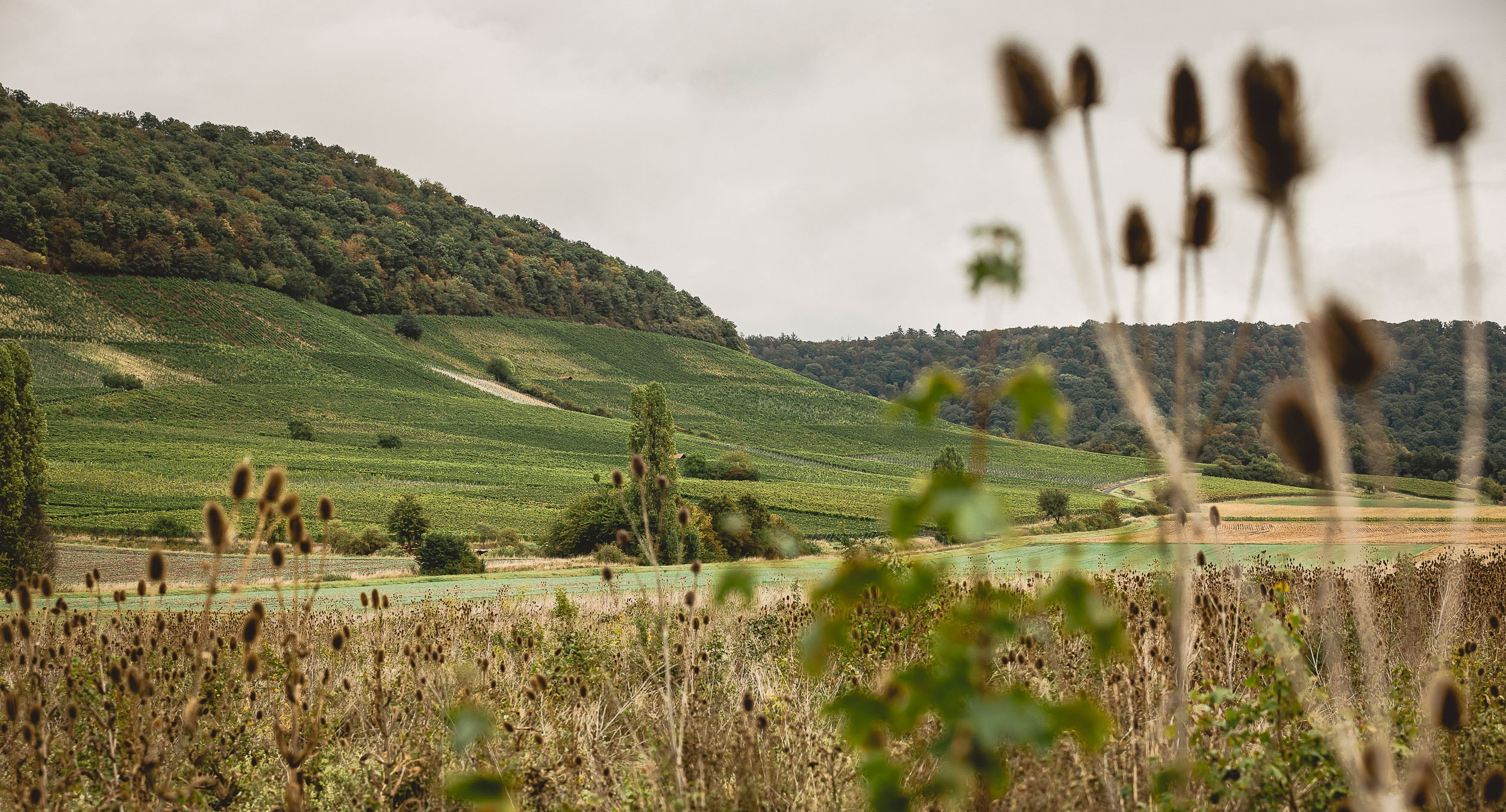
The Iphöfer Kronsberg stretches along the Schwanberg toward the Iphofen district of Birklingen. The gentler foothills of the Julius-Echter-Berg are also part of this site. The name “Kronsberg” derives from “mountain with a crown,” symbolizing the Steigerwald forest atop the Schwanberg.
The Kronsberg is oriented to the south, southeast, and southwest and is considered a relatively cooler site. Here, the Keuper soil is stony and sparse, becoming deeper in the lower sections. Wines from the Kronsberg are characterized by delicate fruit, elegance, and strength. A fresh acidity keeps them light and refined at the same time.
Iphöfer Kalb
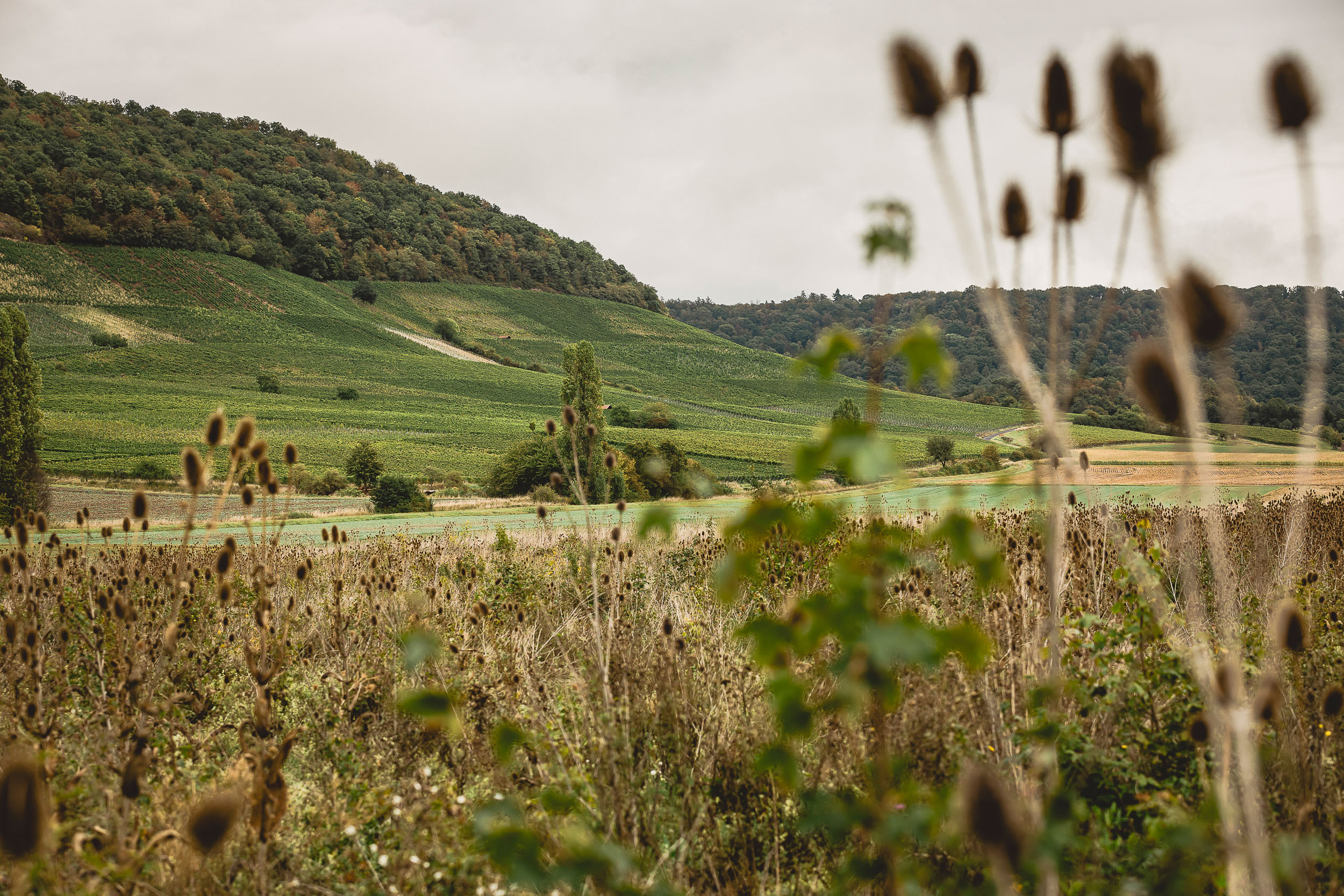
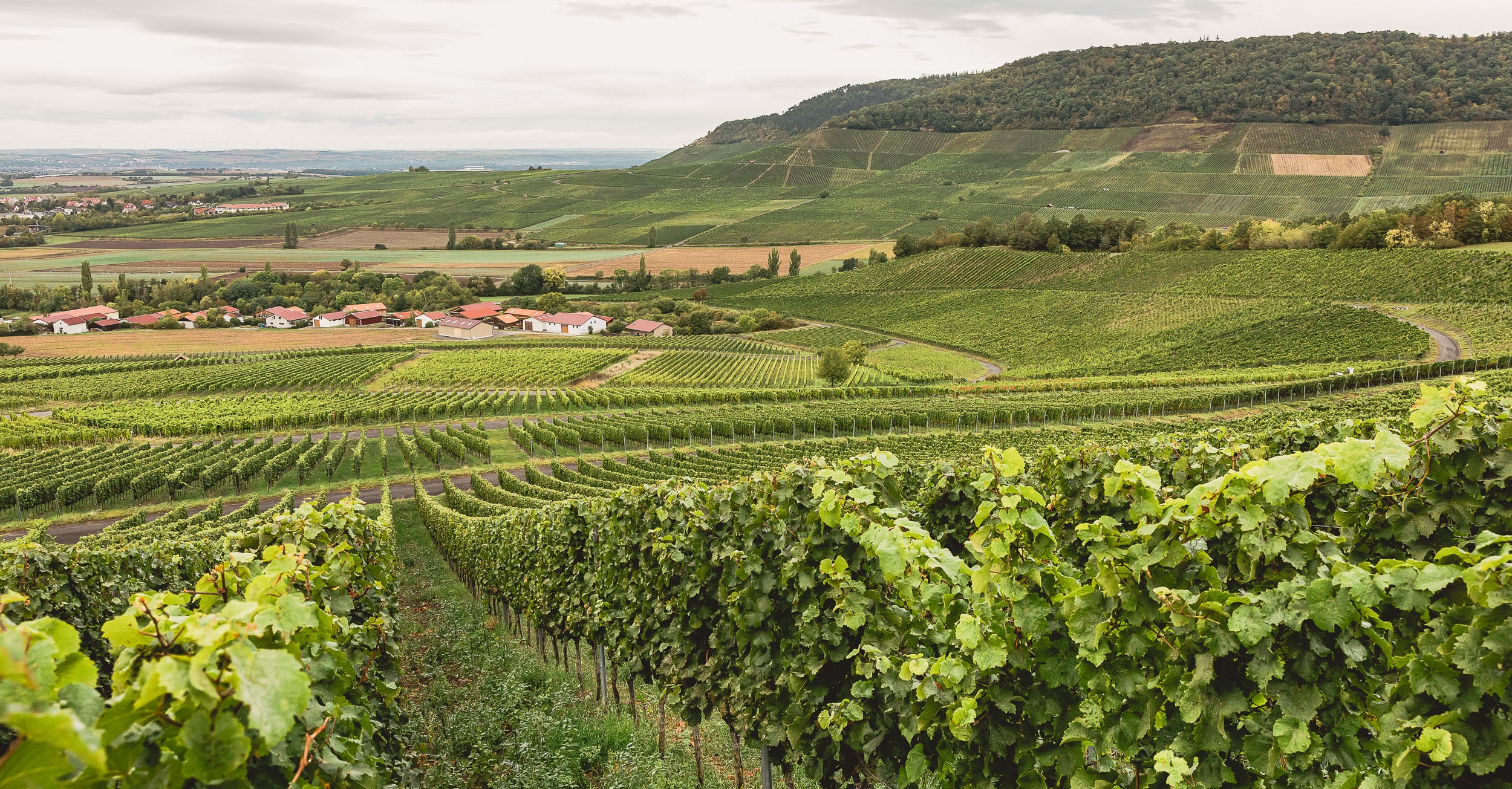
The Iphöfer Kalb is the only one of our vineyard sites not located directly on the Schwanberg, but on a separate hill to the east of Iphofen. Its name derives from “kahler Berg” (“bare hill”), as the site was largely deforested during the Middle Ages.
This relatively cooler site has a higher gypsum content in the soil and is oriented to the south and southwest. Wines from the Kalb show attractive fruit, earthy notes, and considerable power, and are often associated with a more “baroque,” opulent style.
Rödelseer Küchenmeister
The Küchenmeister vineyard is located within the municipality of our neighboring village, Rödelsee, and borders directly to the southwest of the Iphöfer Julius-Echter-Berg. It is therefore no surprise that Küchenmeister wines are also highly sought after and appreciated. The name originates from the noble family Küchenmeister von Nortenberg, who lived in Rödelsee in the 14th century.
As is typical for the Steigerwald, the soil here is characterized by Keuper. In addition, sediments of small marine organisms can be found, along with small slate fragments in the upper sections.
Wines from the Küchenmeister are elegant, mineral-driven, juicy, and show yellow fruit characteristics. They impress with a firm structure and deep, complex aromatics.

